What is AI-native IGA?
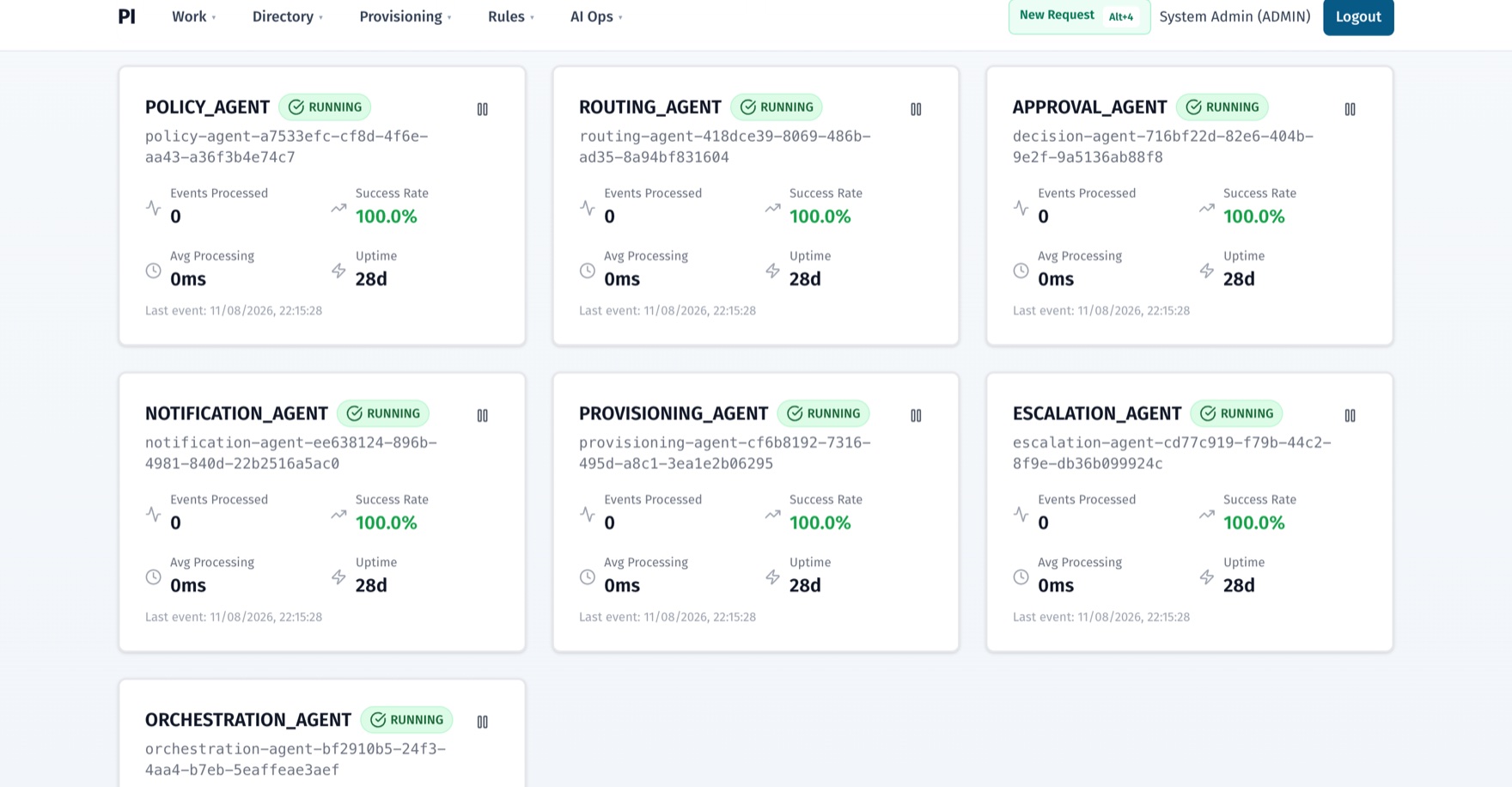
Identity governance and administration in which AI agents make the access decision itself, rather than a rules engine with a language model bolted on to summarise it. It is also called agentic identity governance. In Pato Identity, eight specialised LLM agents read the policy, judge each request, identify the right approvers and provision the result. The legacy model runs quarterly certification campaigns; an AI-native one governs continuously, request by request.
How do you stop an LLM from granting too much access?
Enforcement is deterministic code that runs after the agents have spoken, and it can only tighten their decision. The ladder is fixed: deny beats escalate, escalate beats the agents' proposal, and the agents' proposal beats auto-approve. An agent can escalate a request or add approvers; it can never remove a control you set. That guarantee lives in code, not in a prompt, so it cannot be argued out of the model.
Which identities does it govern?
Every identity type in the estate: employees and contractors, plus the non-human and machine identities most IGA suites treat as an afterthought - service accounts, API keys, certificates, cloud workloads and the AI agents now joining the workforce. They are governed through the same policy and the same approval path as people.
How is access policy written?
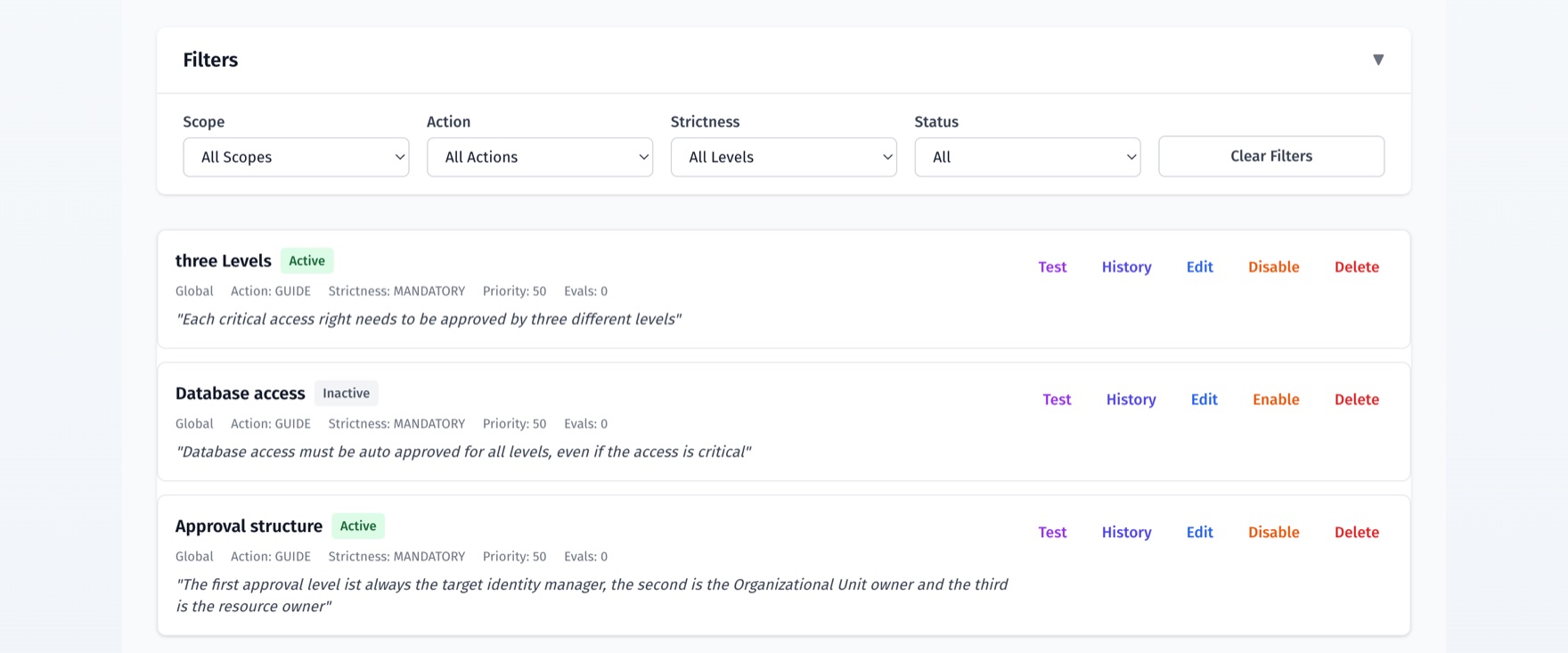
As sentences. You write "Each critical access right needs to be approved by three different levels" and that is the whole authoring step - no rule-engine configuration and no consultant. Before a draft policy goes live it is replayed against real historical decisions so you can see exactly which outcomes it would have changed, and contradictions with existing policy are caught as you write.
Can it run inside our own perimeter?
Yes. Pato Identity deploys into your cloud, your data centre or an air-gapped environment, and can run against a self-hosted language model, so no identity data or access decision has to leave your perimeter. It connects to the identity providers and directories already in place rather than replacing them.
How does an AI access decision hold up in an audit?
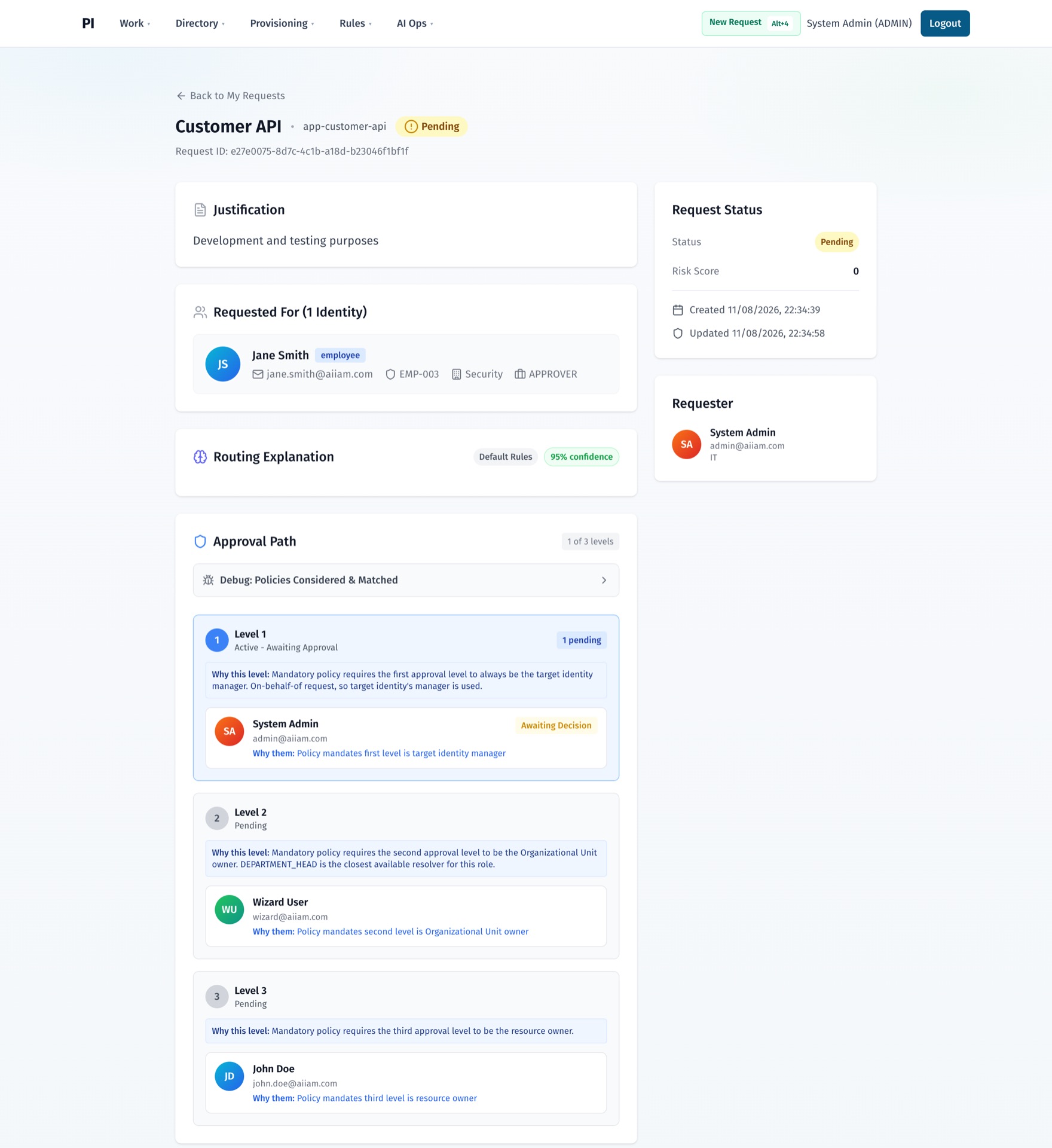
Each request carries its own provenance: which policy matched, why each approval level exists, who was asked and why they were the right person, the routing confidence, and the timestamps. The audit answer is written at decision time and attached to the request, rather than reconstructed from logs months later.